Van de Pallande, Oirschot
LEAF
The back office of an organic vegetable farm.
Products, customers, subscriptions, webshop, packing lists, invoices, direct debit and newsletters in one system.
I built it for my wife, Jess, who runs her week on it.
It went into production in August 2025. Every line of it was written by agents under my direction, with around seven hundred Playwright browser tests.
Why LEAF exists
A farm that invoices in arrears
Most farms with a box scheme charge for the whole season up front, because one amount and a fixed list can be managed by hand.
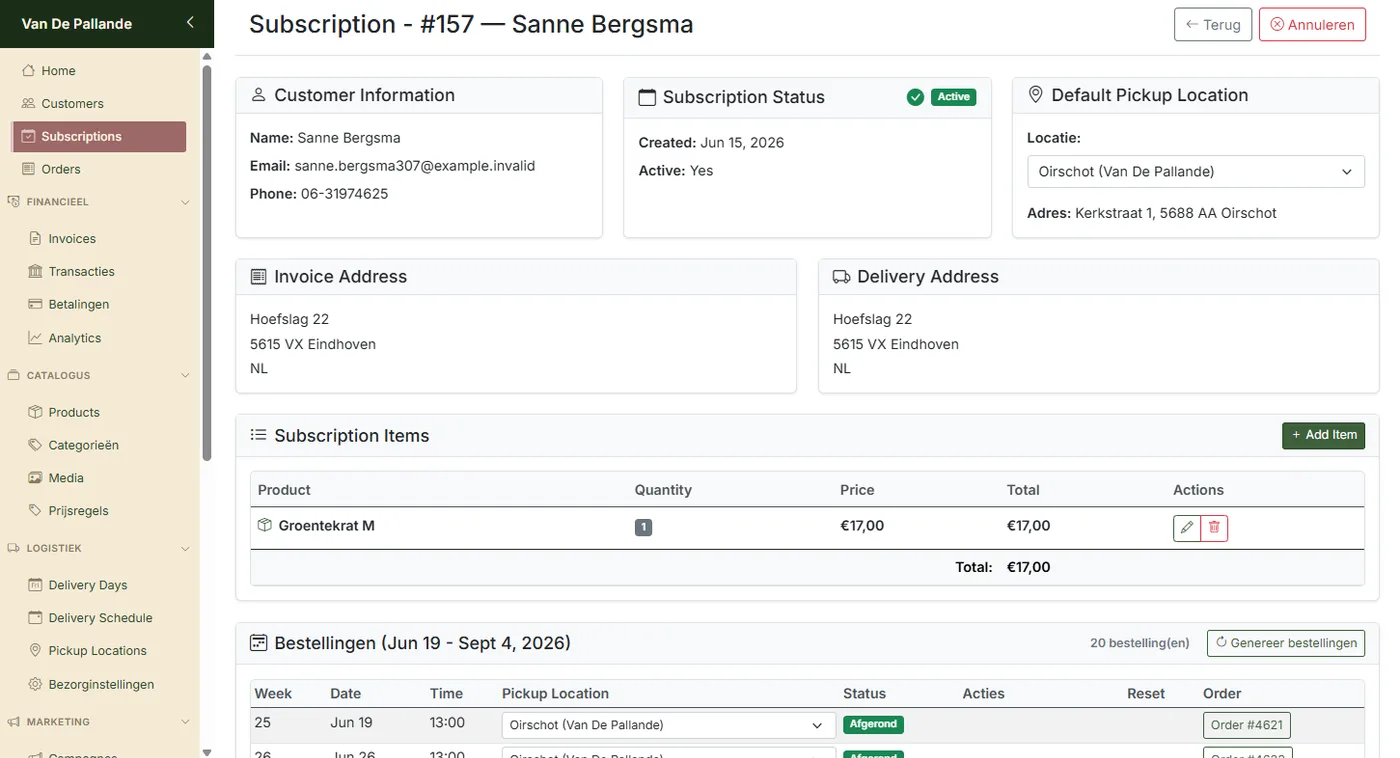
Jess's customers pay in arrears, can skip any week, and can add to an order. She tracked every skip and addition by hand.
The customer records lived across several spreadsheets, next to Mailchimp and the bookkeeping. Invoicing took days, and the mistakes ran both ways: someone who skipped a week sometimes got a bill anyway, and a forgotten addition produced none at all.
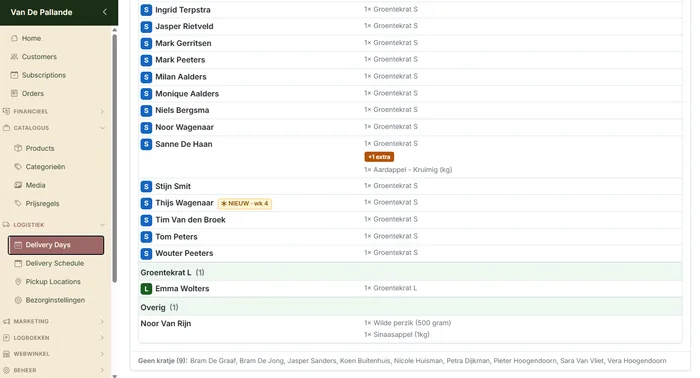
A fresh list per pickup point, every Friday.
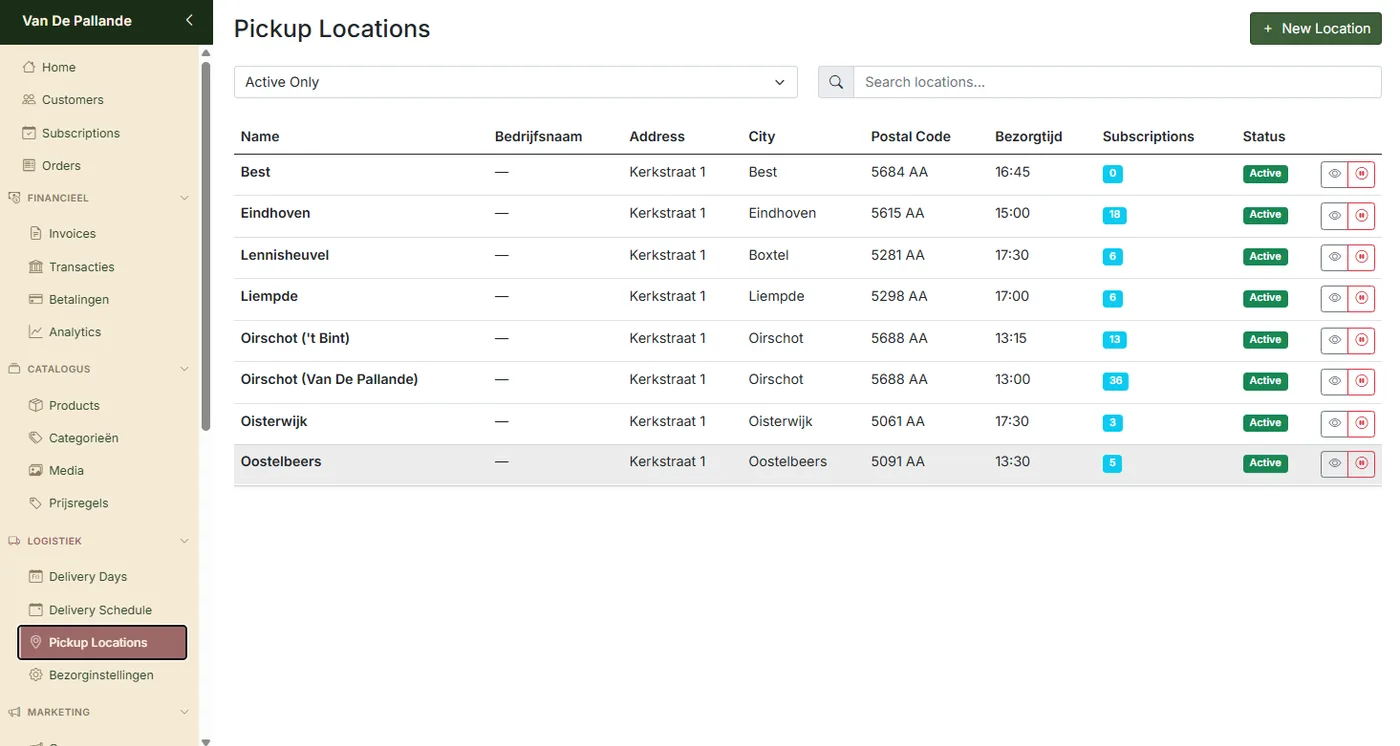
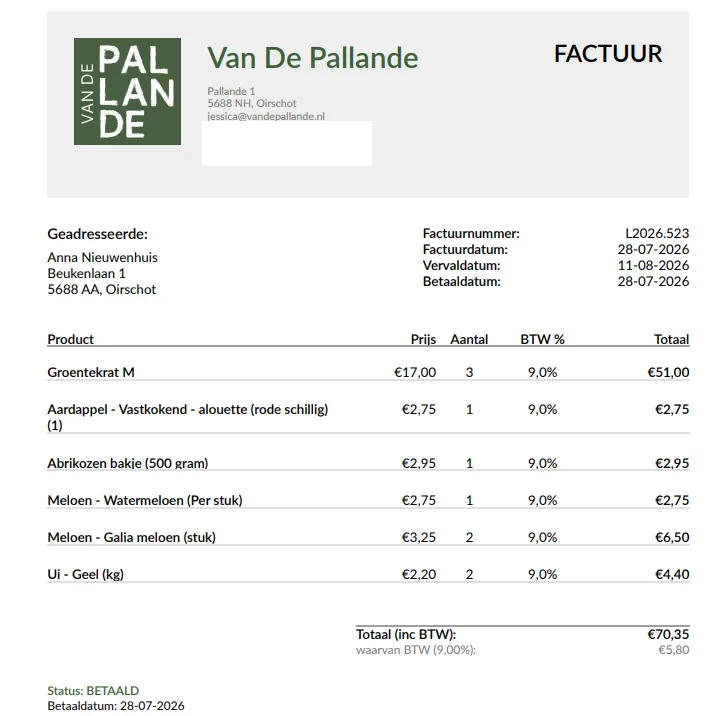
LEAF now produces those lists and invoices for 87 active subscriptions across eight Friday pickup points, in arrears, for what was delivered. It matches incoming payments to the right invoice itself. Invoicing is one run, and a new customer adds no admin.
What it does
From order to payment
One system instead of the spreadsheets, Mailchimp and the bookkeeping.
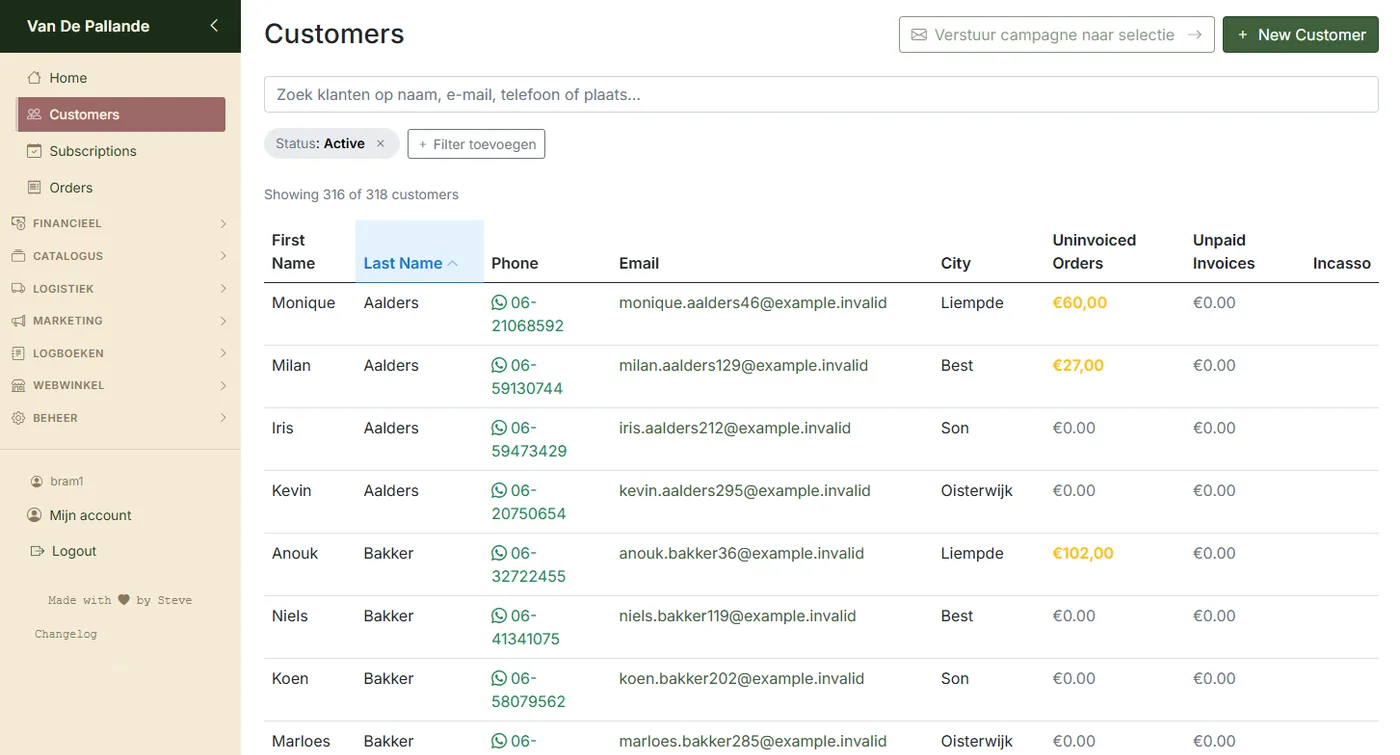
Selling
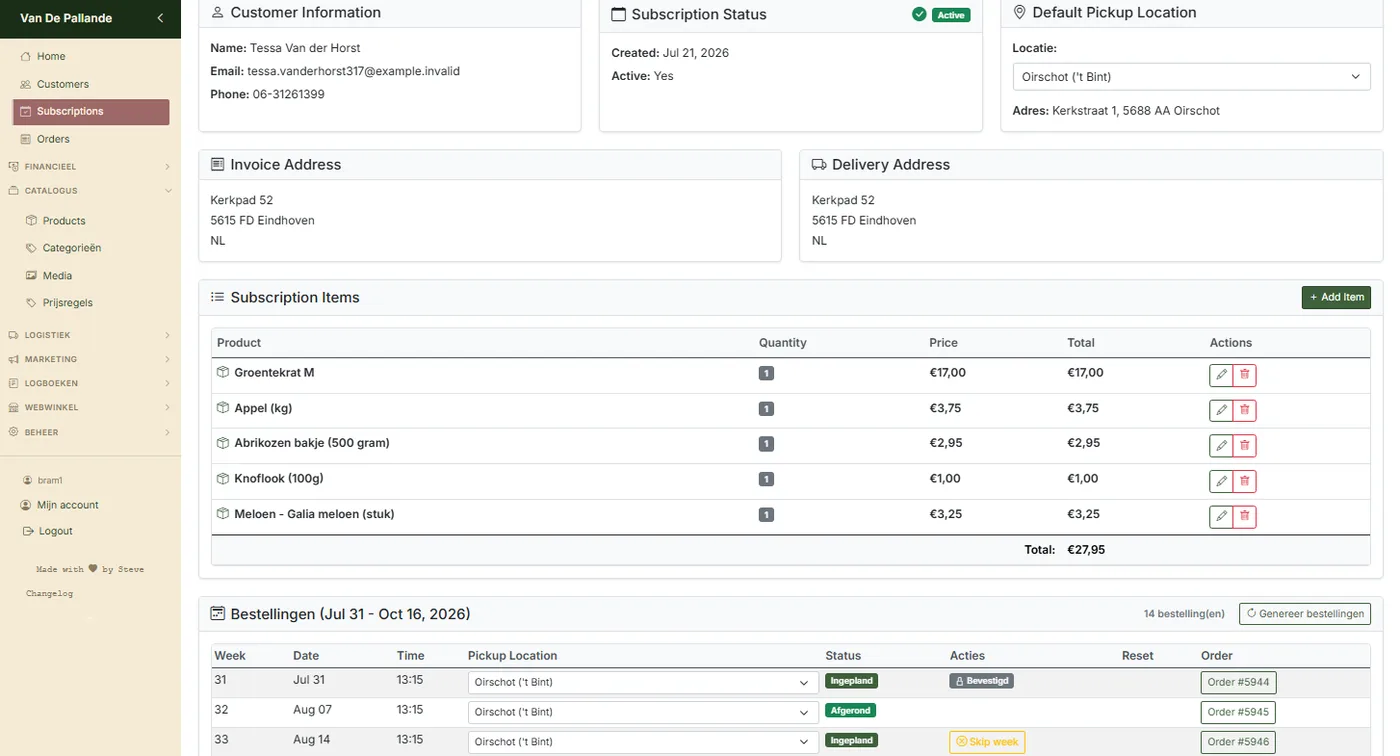
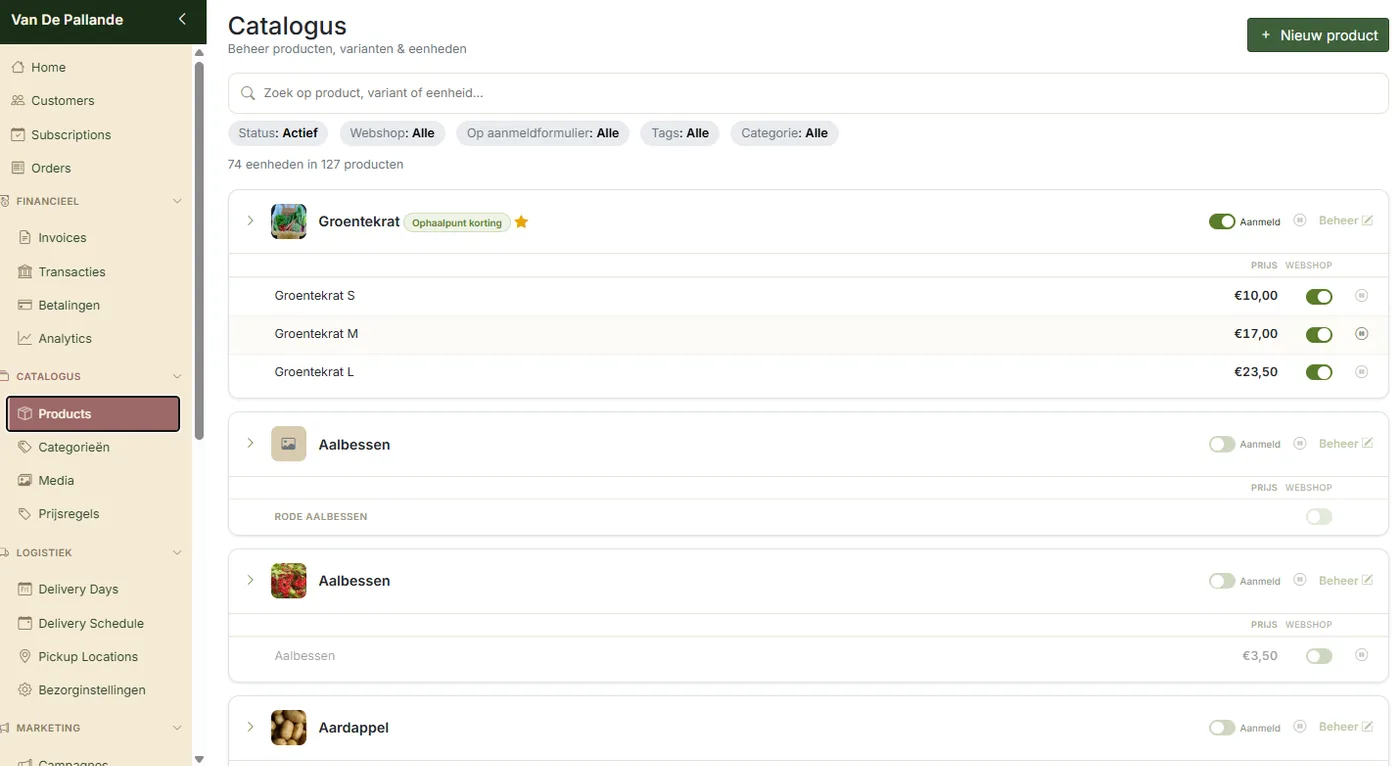
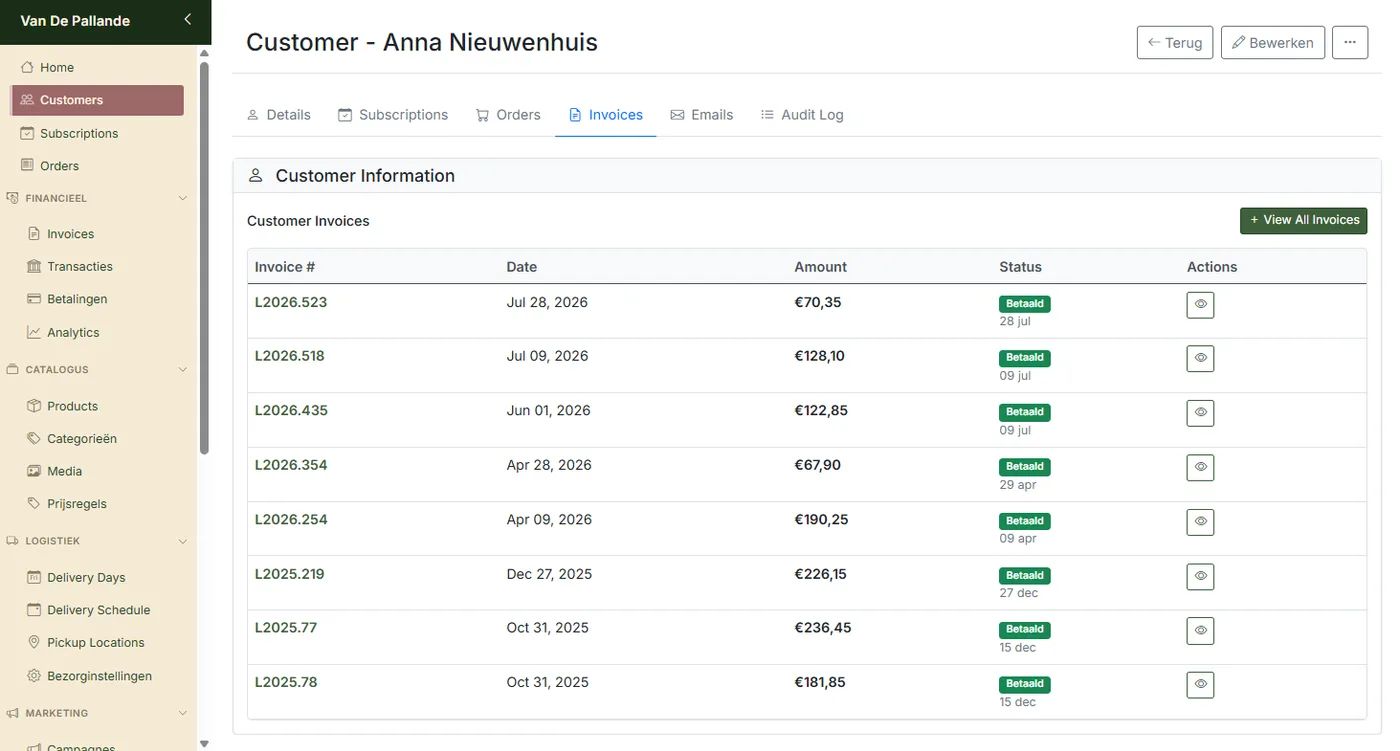
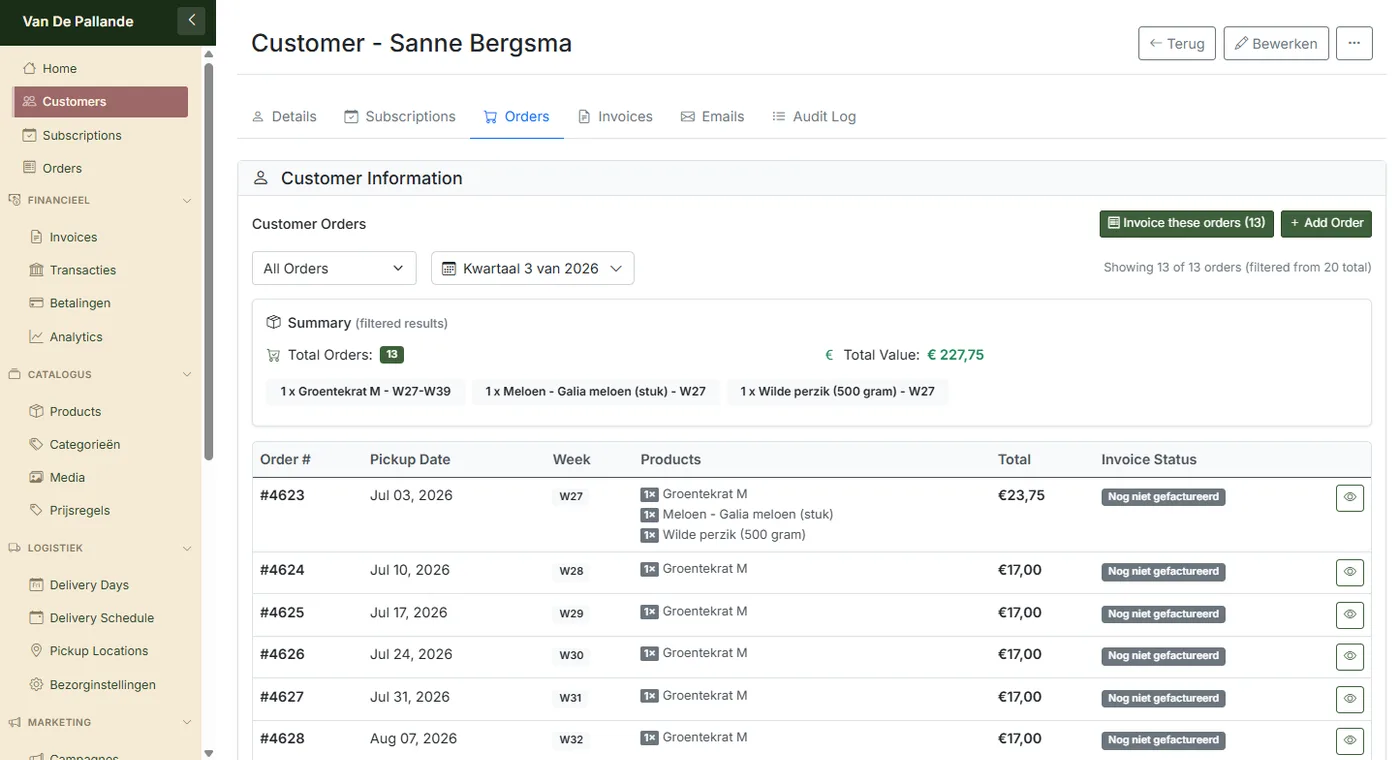
- Customer records with order history
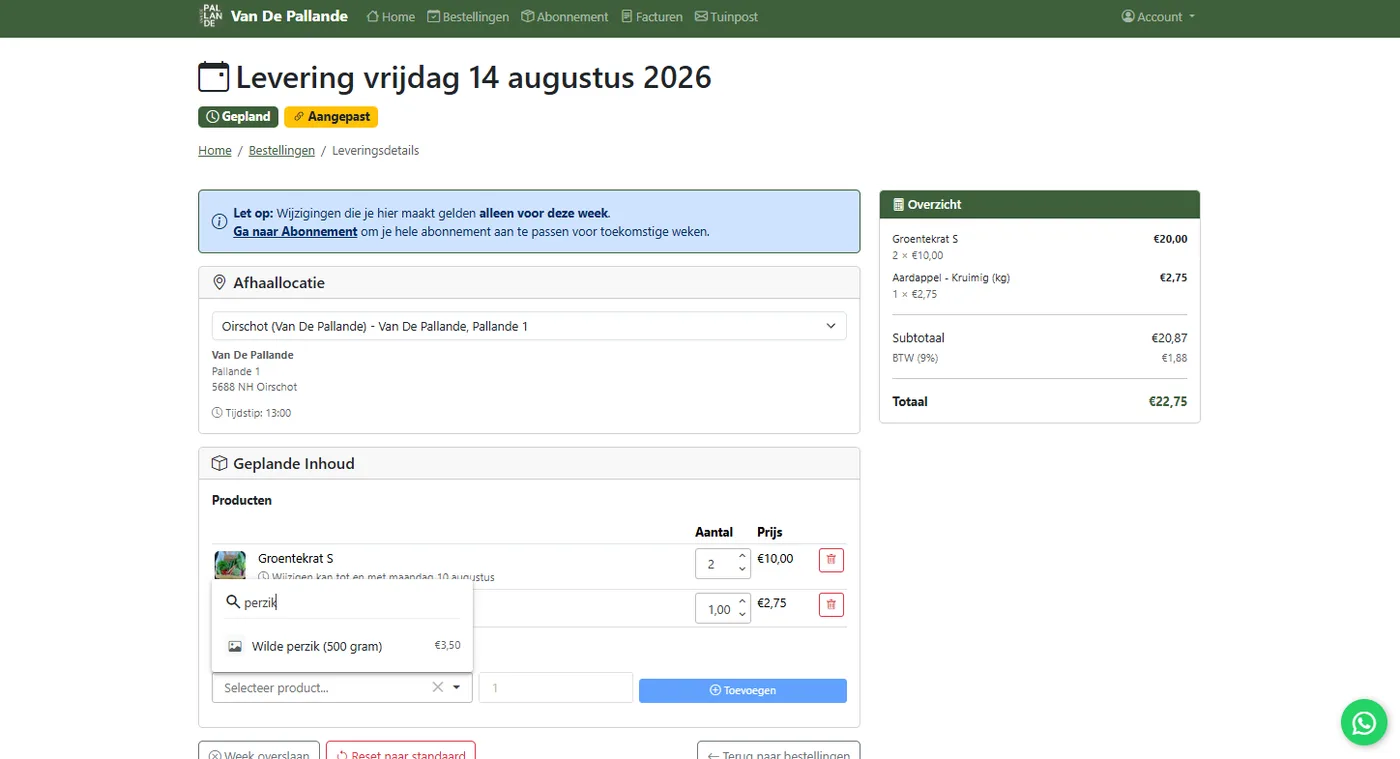
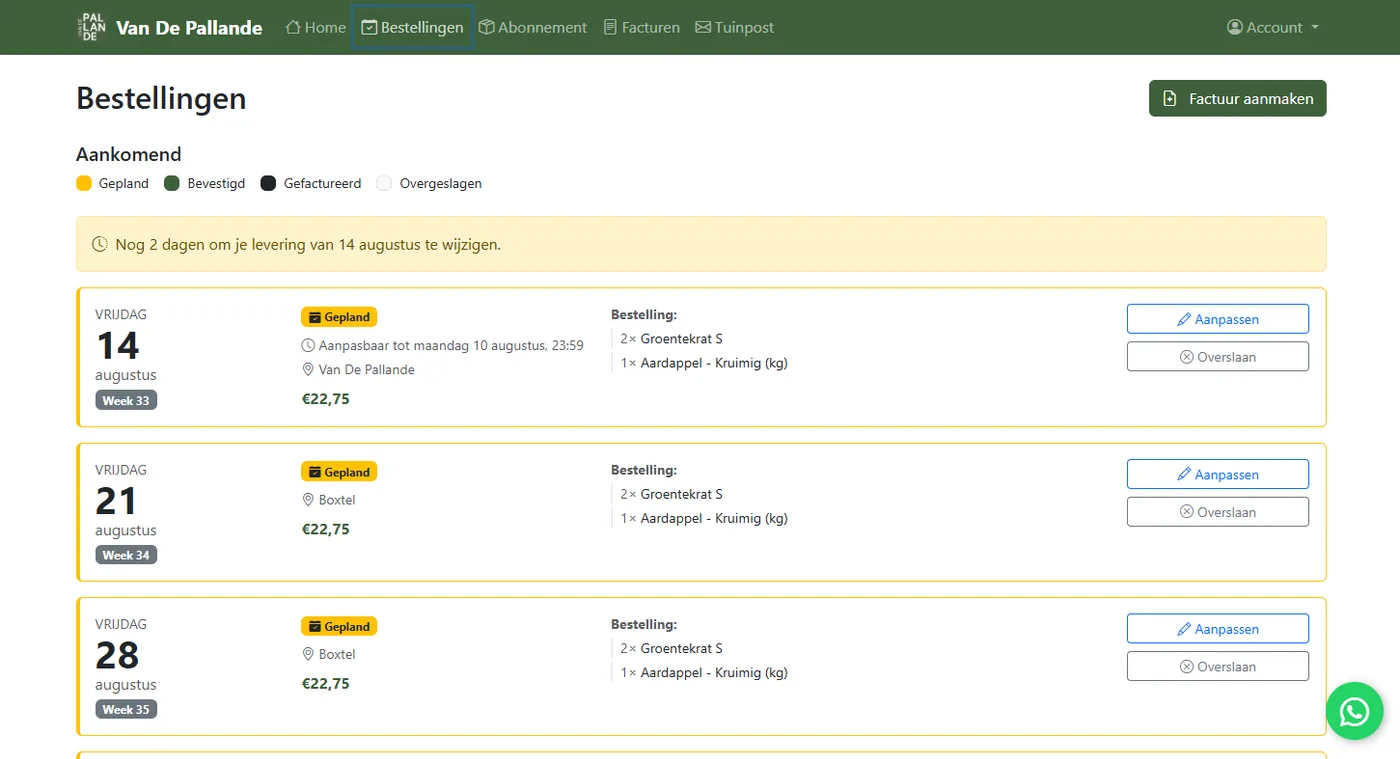
- Subscriptions customers change themselves
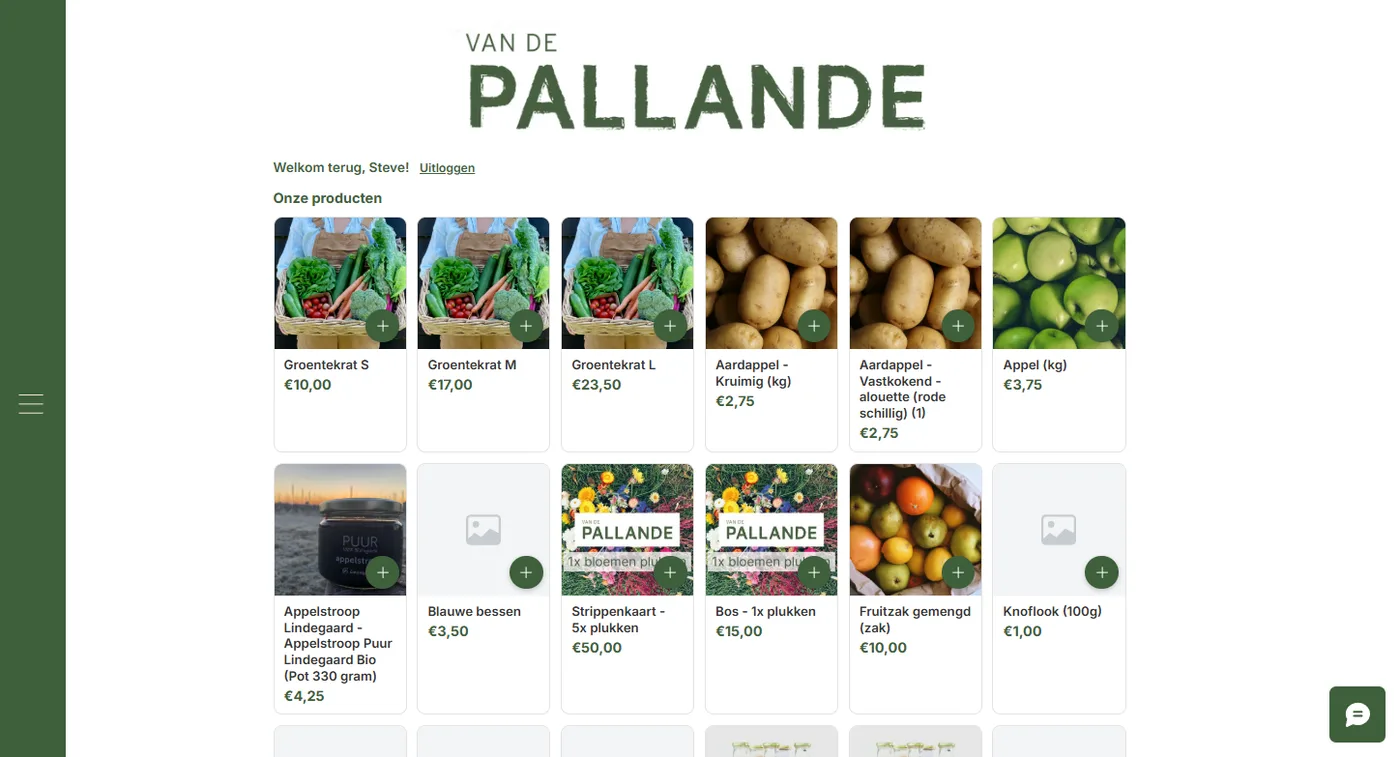
- Webshop for one-off orders
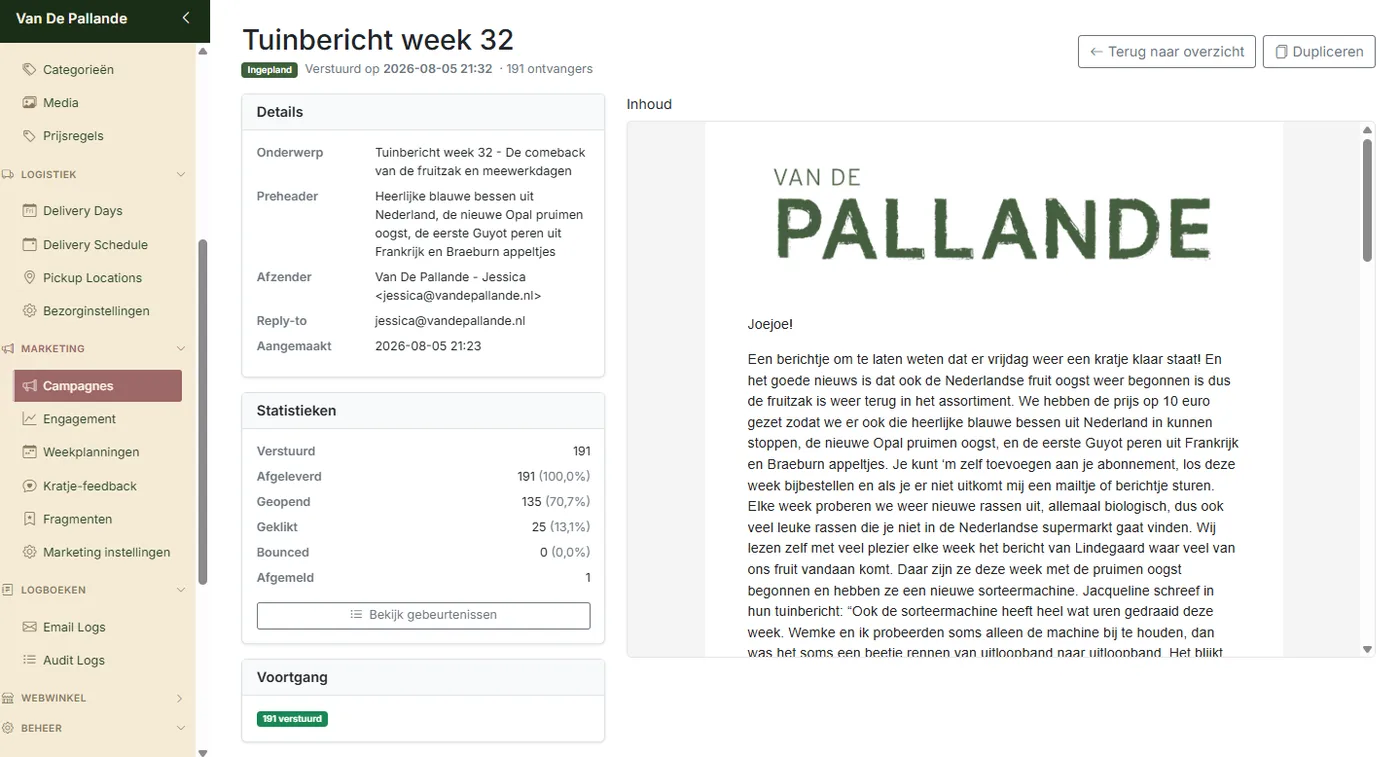
- Newsletter and email
Boxes
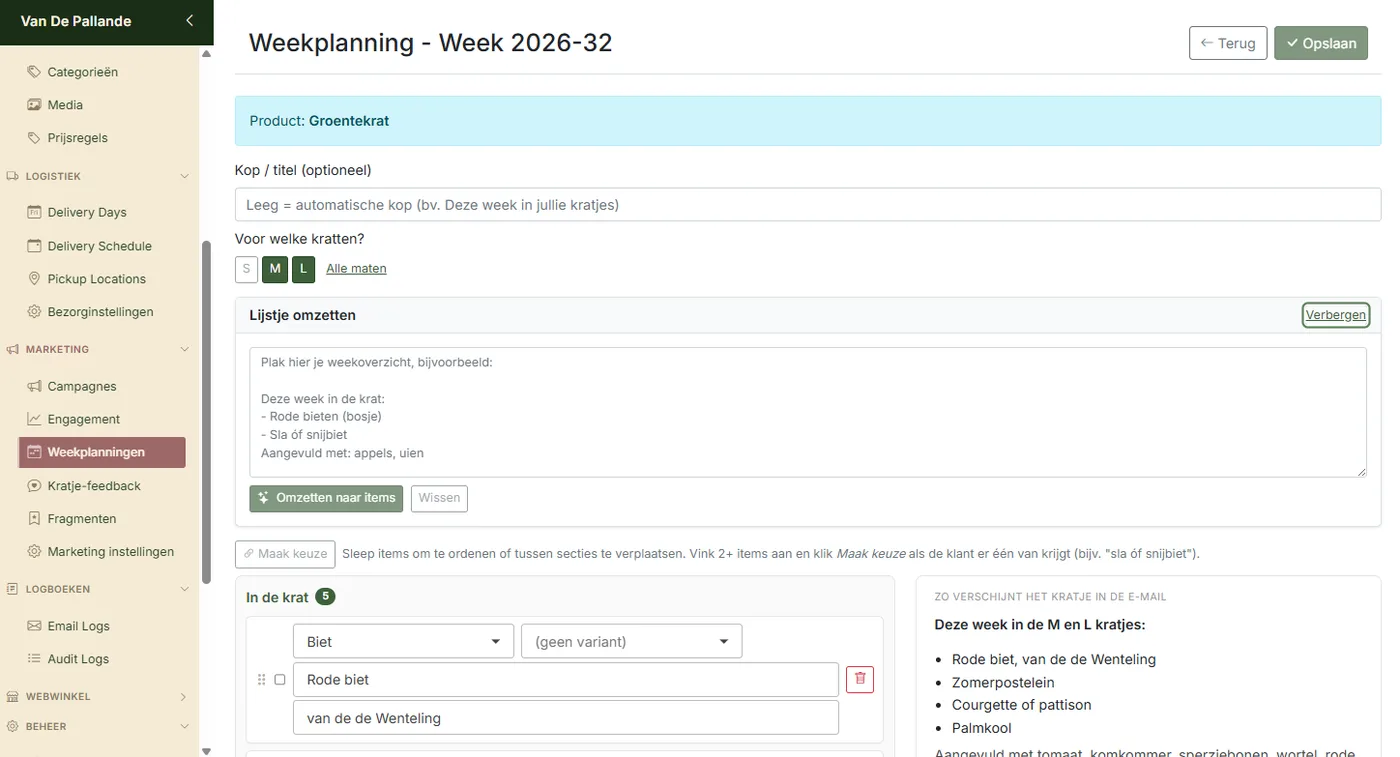
- Week planning
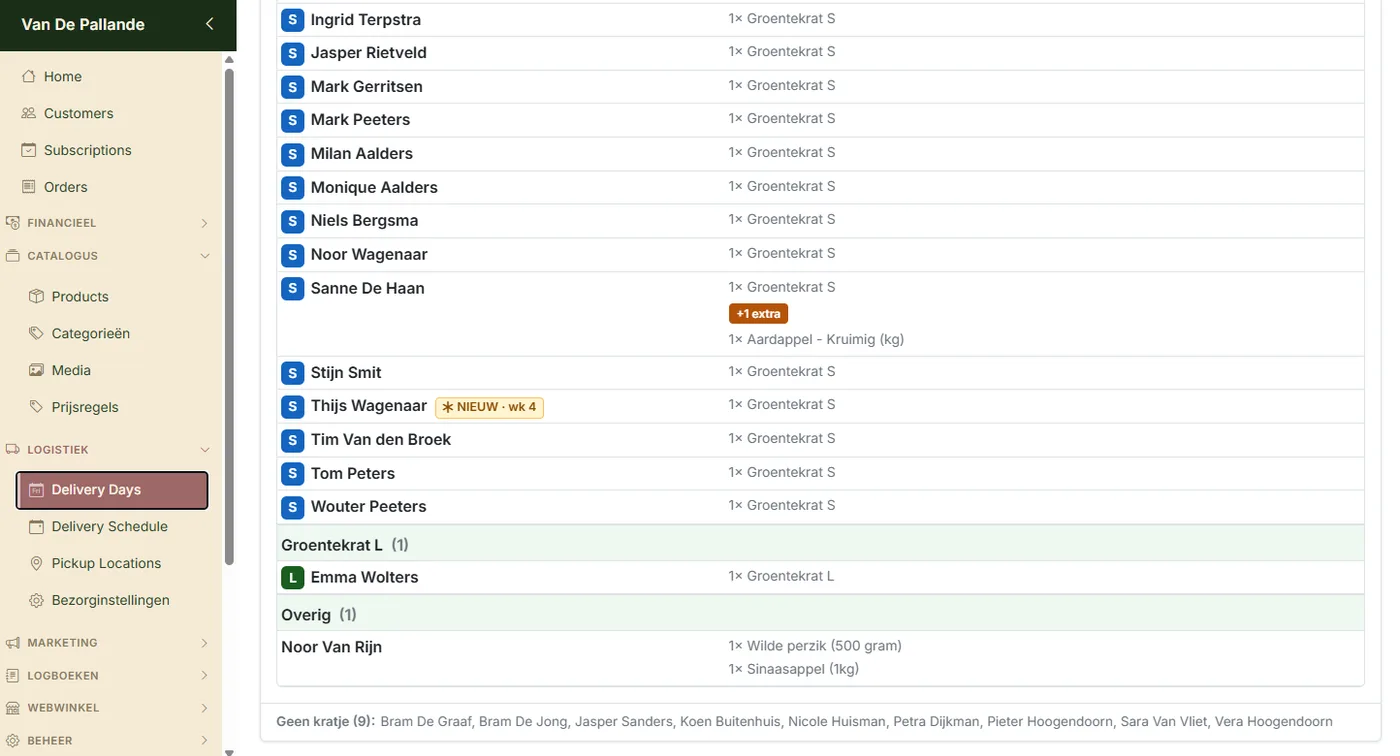
- Packing lists per pickup point
- Delivery days and pickup points
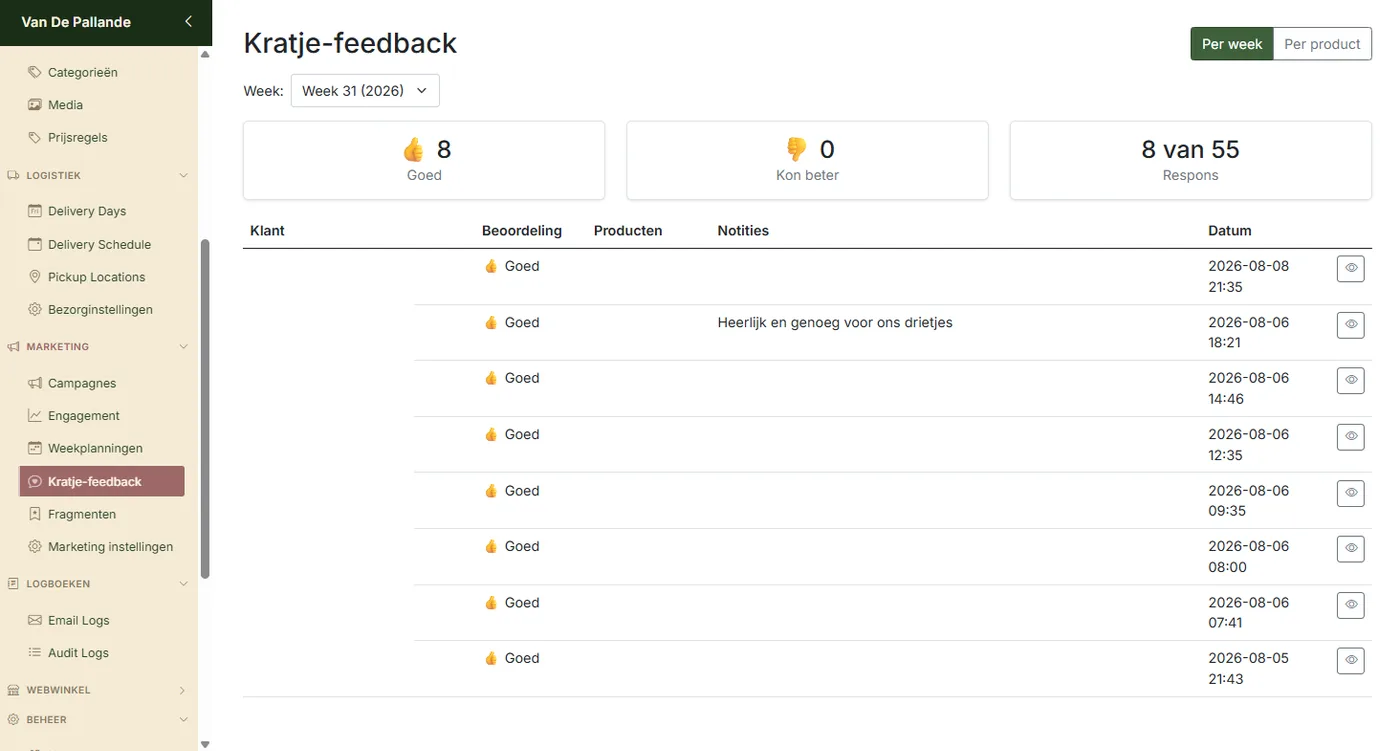
- Customer feedback
Payments
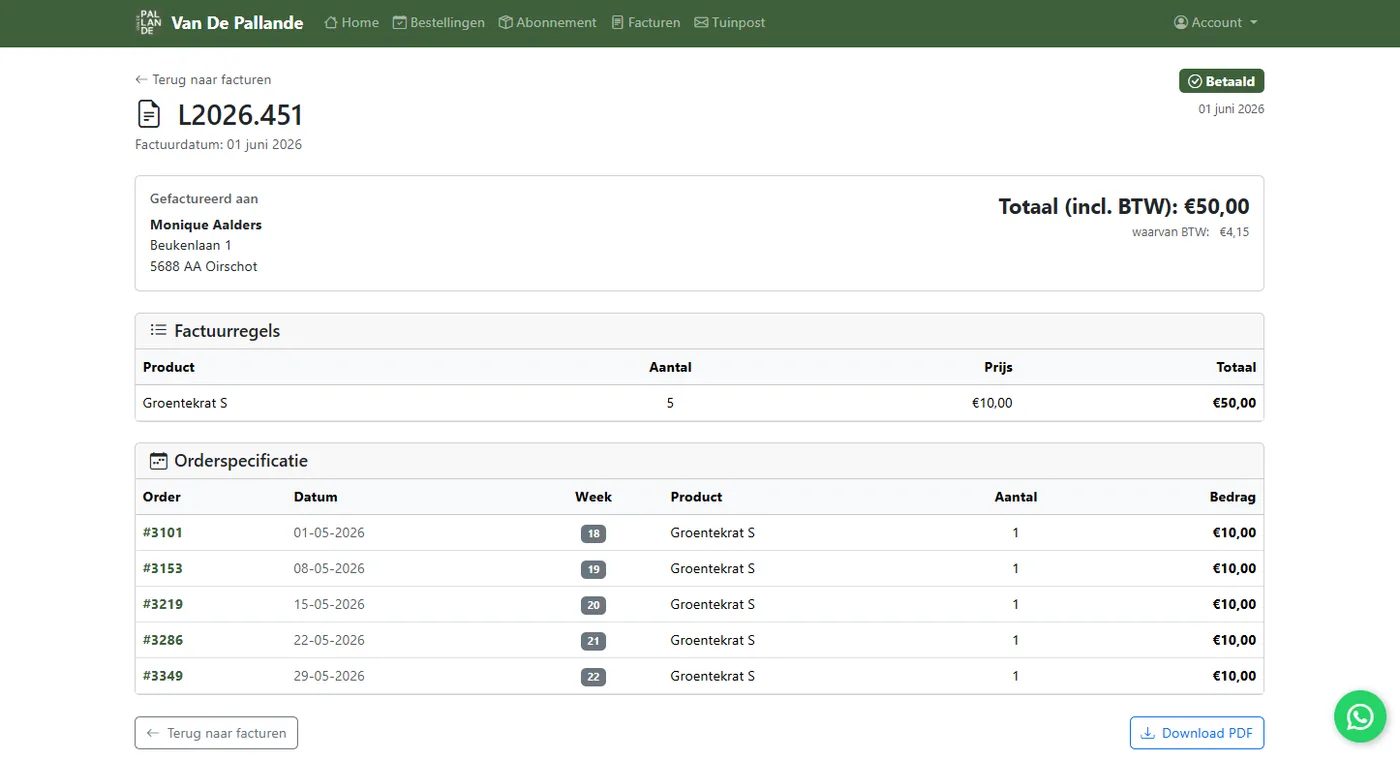
- Invoices and credit notes
- iDEAL/Wero and direct debit through Mollie
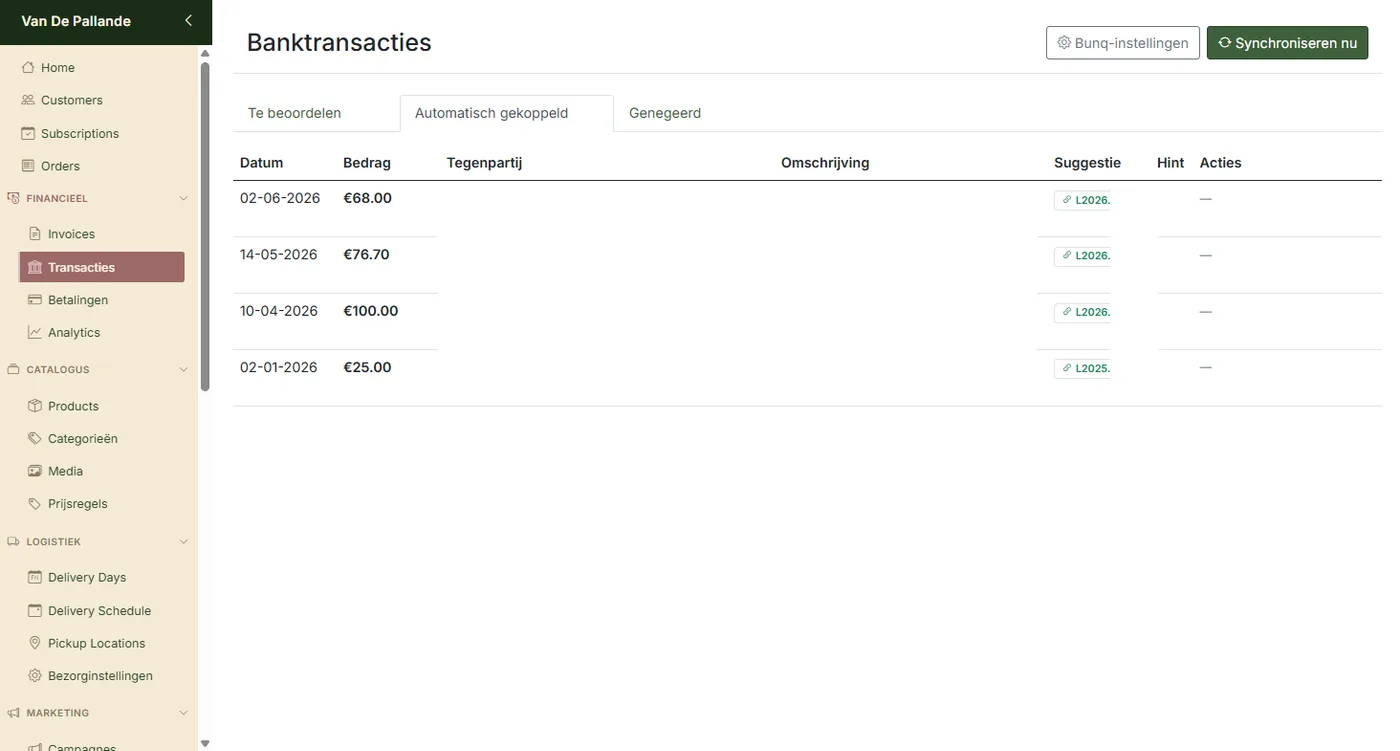
- A bank feed that reconciles payments automatically
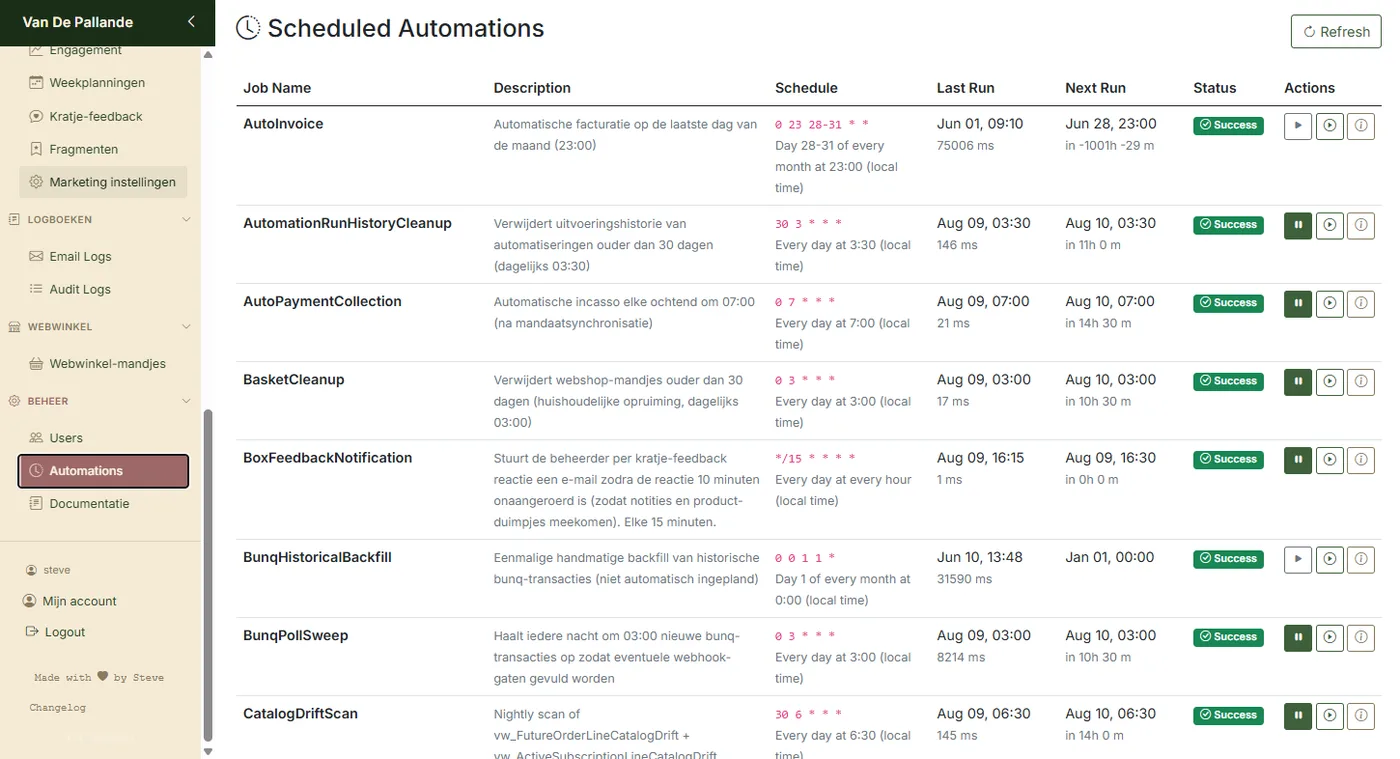
- Invoicing and direct debit run on a schedule
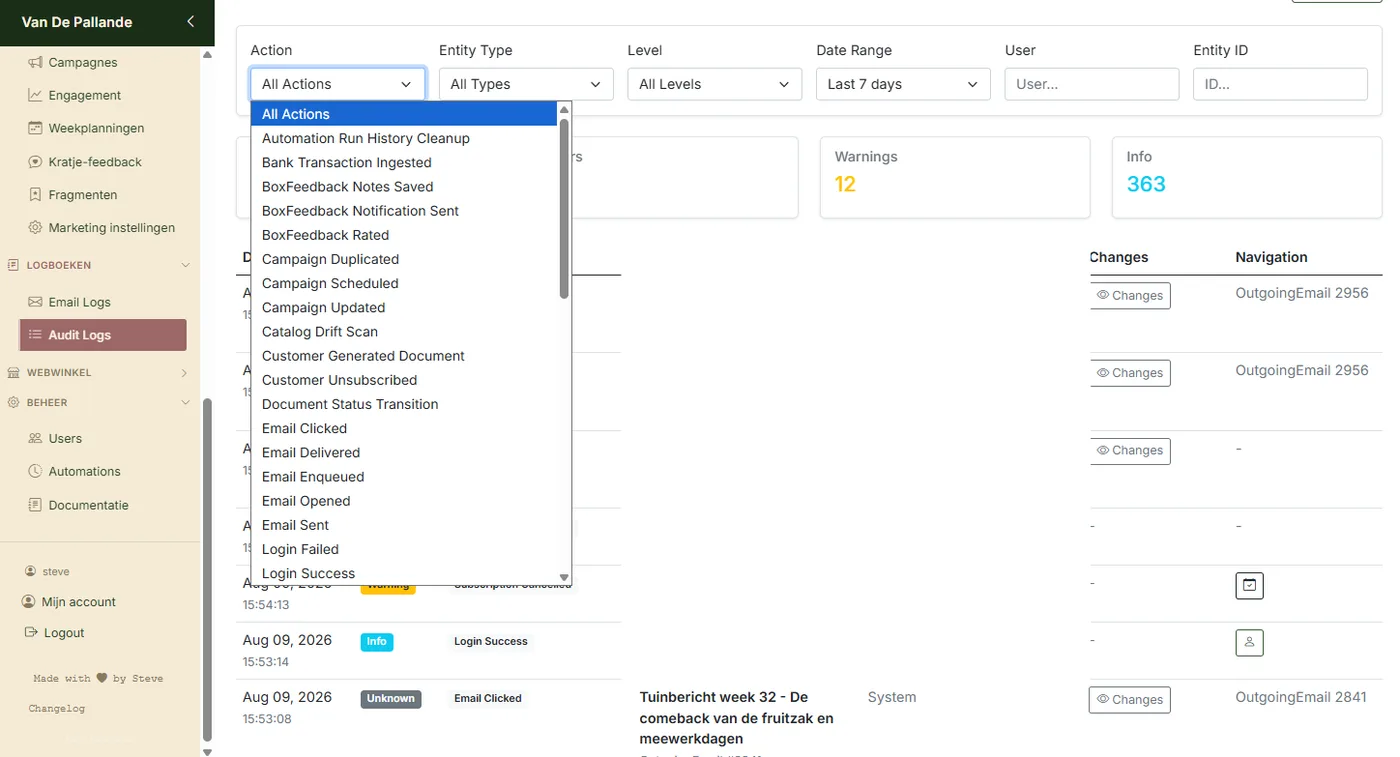
- Every change stays traceable
Because it all sits in one system, the webshop knows the customer who also receives the newsletter. An email to one pickup point is a filter on the customer list, and anyone who logs in already sees their own pickup point and current order. Doorbell, a WhatsApp assistant, turns a request into an action for Jess to confirm; it is in testing now.
Access
Two portals
Jess runs the farm. Customers manage their own subscription.
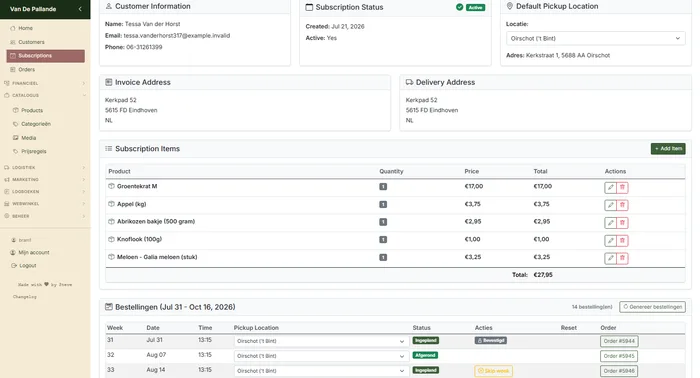
Vendor portal
Jess's daily work: orders, packing lists, invoices and the week plan.
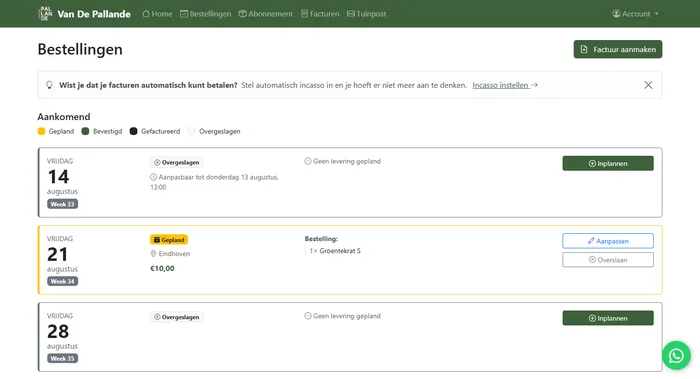
Customer portal
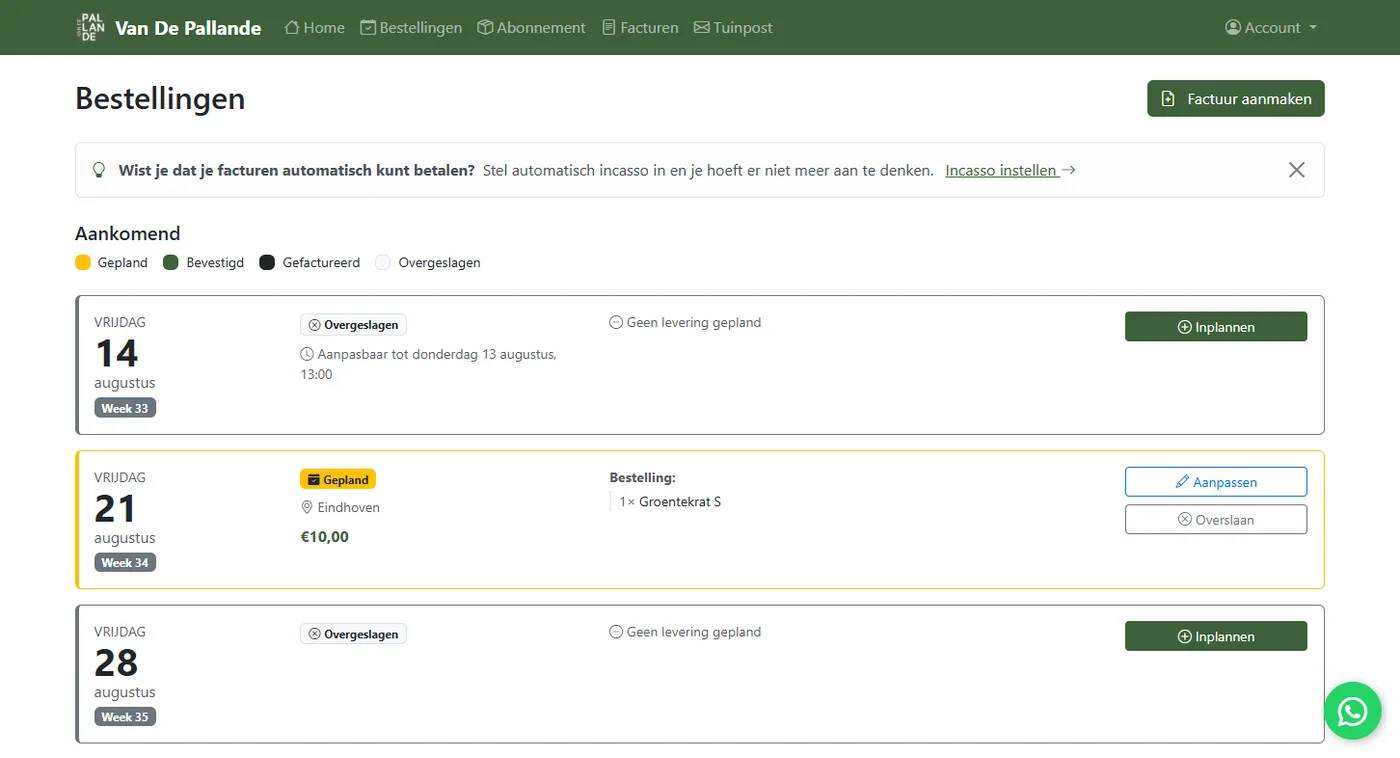
Skip a week, add to an order, change details and pay invoices.
Scope
What it does not do
It was built for one farm.
More than one farm
Every farm on LEAF with its own customers and its own figures.
Supplier network
A shared catalogue, so farms order from each other instead of by email.
Planting plan driven by demand
A planting plan built from what customers ordered before.
Screenshots
A look inside
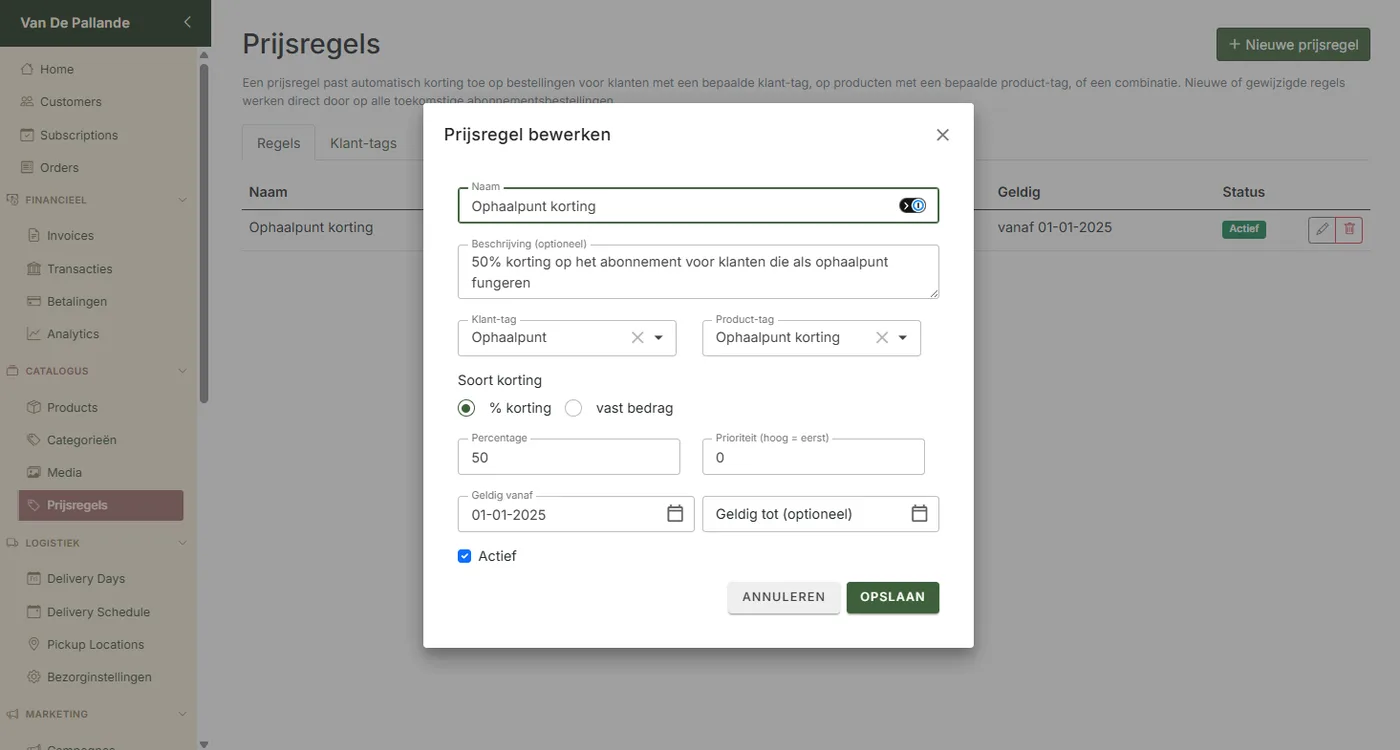
The data in these screenshots is not real. Names, addresses and payment details have been replaced.
Build or buy
Why I built it instead of buying it
Webshop subscriptions assume a fixed amount on a fixed day. Here the amount changes every week and a week can be skipped.
Add something to a subscription for one week in most webshop tools and it becomes part of every renewal after it. Jess's customers can cancel a box until Tuesday and add to it until Thursday, and the invoice is for what was delivered. LEAF is written to that process exactly.
Selling aside, none of them has pickup points, packing lists, week planning or a bank feed that reconciles against invoices. Building those took a hundred and fifty working days; an extension would have covered the shop and left the rest in spreadsheets.